
What You Need to Know About the New Dietary Guidelines
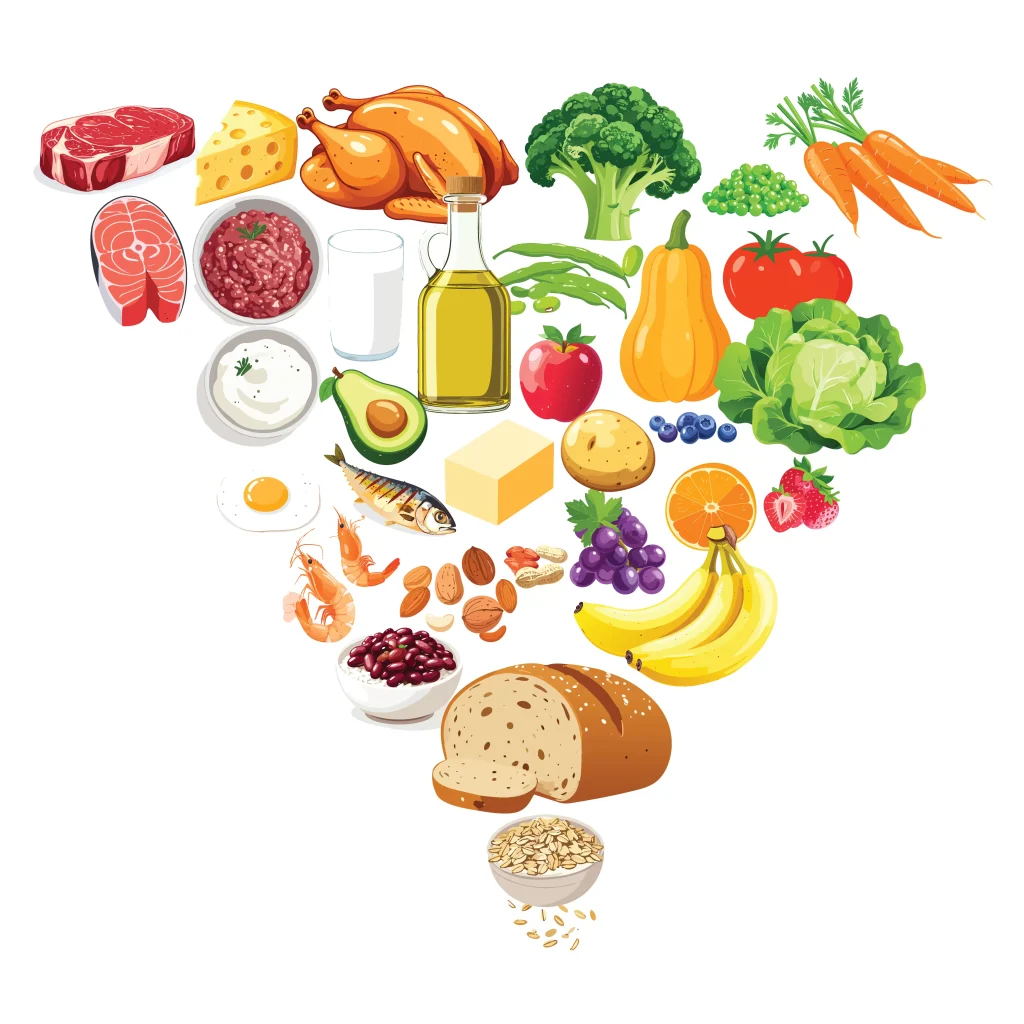
Over the past few months, talk about the 2025–2030 Dietary Guidelines for Americans has been making waves. News stories are zeroing in on protein, questioning older advice about fat and introducing a redesigned food pyramid. And with what seems like so many changes, many people are confused about what’s being recommended.
Here are some common questions about these new guidelines, along with brief explanations of what’s new and what’s similar to past advice.
Are these guidelines totally new and different?
Not entirely. Like past versions, the 2025–2030 Dietary Guidelines, released by the U.S. Department of Health and Human Services and the U.S. Department of Agriculture, encourage eating whole, nutrient-rich foods such as vegetables, fruits, whole grains, lean proteins and healthy fats. They also agree that foods with lots of added sugar, sodium and refined carbs should be limited, and that balanced eating patterns are the goal.
Where things are different is in the emphasis. The new guidelines put a stronger spotlight on avoiding highly processed foods, like chips, candy, soda and ready-to-eat packaged meals. As long as you’re eating “real” food, they don’t differentiate exactly how much of each food group you should eat.
What is the new food pyramid all about?
One big change is the return of a food pyramid, though it’s quite different from older versions. Instead of the MyPlate icon that showed portions of food groups on a plate, there’s now an inverted food pyramid, where protein, fats, dairy, vegetables and fruits are placed at the top as priority foods. Whole grains and other carbohydrate-based foods are less prominent, and there’s a message to avoid highly processed foods. The graphic reflects the overall theme of prioritizing real food rather than singling out certain macronutrients. This is a big change from previous guides.
Does this mean fat and protein are suddenly “good” for everyone?
The guidelines emphasize high-quality protein and don’t exclude fats that come from whole foods like nuts, seeds, fish, eggs, meat or dairy. However, health experts still warn that not all fats and proteins are equal. Too much saturated fat, like you’ll find in butter, cheese and fatty meats, is still linked to higher risks of heart disease.
It’s still recommended that saturated fat consumption be less than 10% of total daily calories, but the guidelines suggest that significantly limiting highly processed foods will help meet this goal. And while the guidelines offer higher recommended intake ranges for protein than older advice, balancing protein intake with other nutrients like fiber remains important, according to dietitians.
What’s the stance on sugar?
Unlike previous dietary guidelines that recommended limiting added sugar, the new guidelines take a hard line. For children, especially younger kids, no amount of added sugar is recommended. Adults are encouraged to eliminate or keep added sugars very low. Drinks with sugar are explicitly singled out as foods to avoid. This more aggressive stance reflects growing concern about the effects of sugar on health and childhood eating habits.
Why does this feel so confusing?
These guidelines present things differently compared to the nutrition messaging we’ve gotten used to. Many nutrition experts applaud the focus on whole foods and the recommendations to reduce or eliminate added sugar and highly processed foods. Others are worried that putting protein and full-fat dairy front and center may overshadow evidence about the risks of too much saturated fat. So although the core theme of healthy, balanced eating remains, the ways those ideas are presented have shifted, which is causing quite a bit of confusion.
Copyright 2024-2025 © Baldwin Publishing, Inc.. Health eCooks® Heart Healthy Recipes® is a registered trademark of Baldwin Publishing, Inc. Any duplication or distribution of the information contained herein without the express approval of Baldwin Publishing, Inc. is strictly prohibited.